Der cirkulerer mange misforståelser om elbiler. Nogle stammer fra forældet information, andre fra misforståelse af teknologien, og nogle afspejler legitime bekymringer, der siden er blevet løst. Her undersøger vi de mest almindelige misforståelser sammen med aktuelle fakta og data.
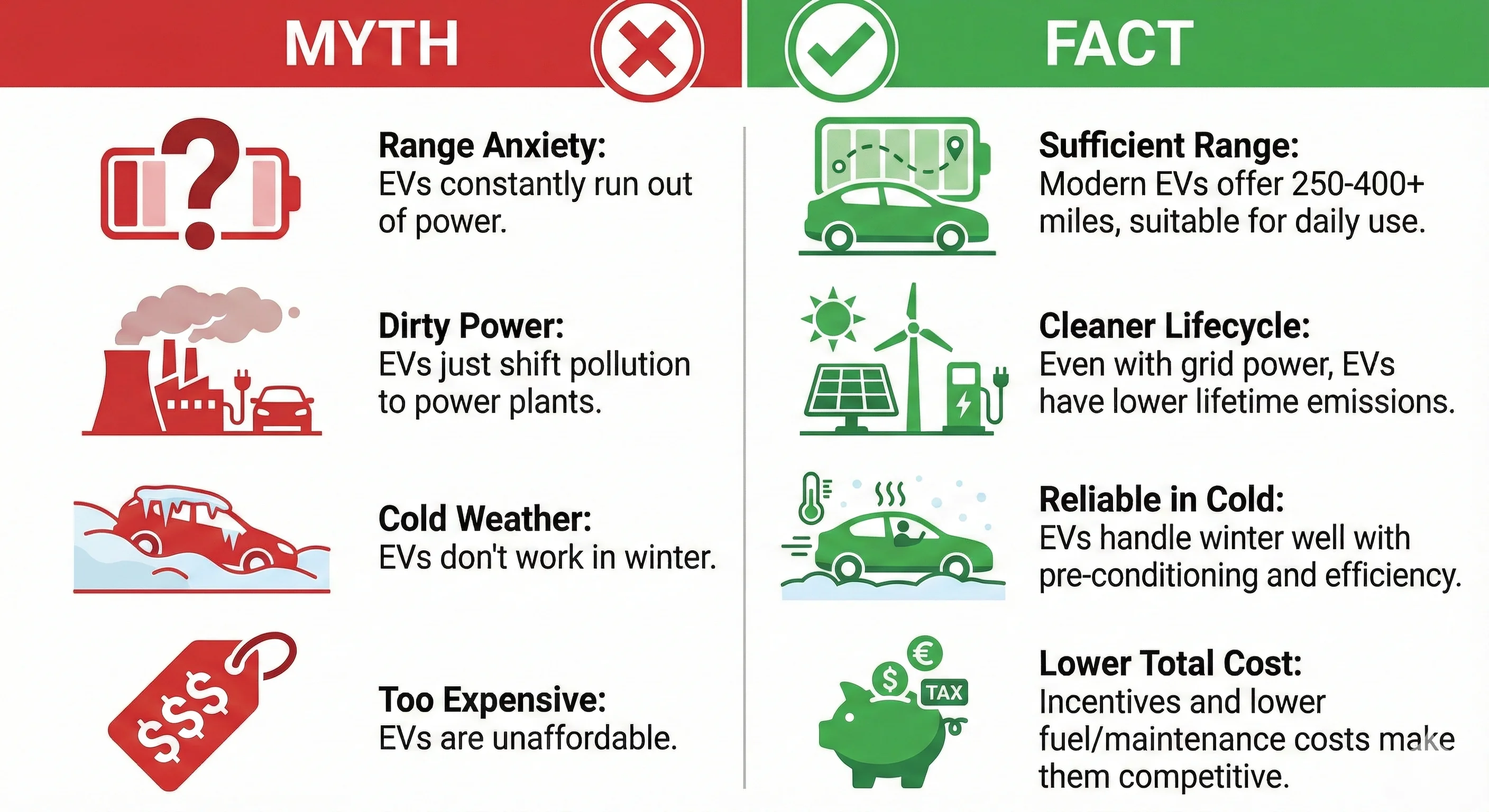
"Elbiler er ikke rigtig bedre for miljøet"
Elbiler er markant bedre for miljøet
Livscyklus-emissioner: Selv når man tager højde for produktion og strømgenerering, producerer elbiler 50-70% færre emissioner over deres levetid sammenlignet med benzinbiler.
Bliver renere: Efterhånden som elnettet inkorporerer mere vedvarende energi, bliver elbiler automatisk renere uden ændringer af køretøjet.
Produktionspåvirkning: Ja, batteriproduktion har miljøomkostninger, men dette opvejes mere end rigeligt af de emissioner, der spares under brug. "Break-even"-punktet nås typisk inden for 1-2 års kørsel.
Selv med kul: Studier viser, at selv i regioner der er meget afhængige af kulkraft, producerer elbiler stadig færre samlede emissioner end benzinbiler på grund af elmotorernes overlegne effektivitet.
"Elbiler har ikke rækkevidde nok til daglig brug"
Moderne elbiler har mere end nok rækkevidde til de fleste bilister
Gennemsnitlig daglig kørsel: Den gennemsnitlige bilist kører ca. 50 km om dagen. Selv budgetelbiler tilbyder 300+ km rækkevidde – 6 gange det daglige gennemsnit.
Moderne rækkevidde: Mange aktuelle elbiler tilbyder 400-560+ km rækkevidde, sammenlignelig med mange benzinbiler.
Fordelen ved hjemmeladning: Med hjemmeladning starter du hver dag med en "fuld tank", i modsætning til benzinbiler, hvor du skal omveje til en tankstation.
Lange ture: Hurtigladenetværk gør langdistancekørsel praktisk. Et 20-30 minutters opladningsstop for hver 300-480 km passer godt med naturlige pausetider.
"Elbiler virker ikke i koldt vejr"
Elbiler fungerer fint i koldt vejr, med nogen rækkevidde-reduktion
Rækkeviddepåvirkning: Koldt vejr kan reducere rækkevidden med 20-40% under ekstreme forhold, men der er stadig rigeligt rækkevidde til daglig kørsel.
Norges succes: Norge, et af de koldeste lande i Europa, har over 90% elbil-markedsandel for nybilsalg. Hvis elbiler ikke fungerede i koldt vejr, ville dette ikke være muligt.
Forudkonditionering hjælper: Opvarmning af kabinen og batteriet mens bilen er tilsluttet minimerer rækkeviddetabet, og du starter med en varm bil.
Ingen startproblemer: I modsætning til benzinbiler har elbiler ingen problemer med at starte i koldt vejr. Ingen frosne brændstofledninger, ingen flade batterier fra tændingsforsøg, eller ventetid mens motoren varmer op.
"Du skal udskifte batteriet efter et par år"
Elbil-batterier varer meget længere end de fleste tror
Garantibeskyttelse: Elbil-batterier kræves i lovgivningen at have garanti i mindst 8 år/160.000 km. Mange producenter tilbyder 8-10 års/240.000+ km garantier.
Virkelighedsdata: Studier af Tesla-køretøjer viser i gennemsnit kun 10% kapacitetstab efter 320.000 km. De fleste batterier vil overleve køretøjet.
Gradvis nedbrydning: Batterier fejler ikke pludseligt – de mister gradvis kapacitet over mange år. Selv med nogen nedbrydning forbliver bilen fuldt brugbar.
Faldende omkostninger: Batteriomkostninger faldt 89% fra 2013 til 2023 og fortsætter med at falde, hvilket gør fremtidige udskiftninger meget mere overkommelige.
"Opladning tager for lang tid"
Opladning er faktisk mere bekvem end at tanke benzin til daglig brug
Hjemmeladning: Sæt bilen til om natten, vågn op med fuld opladning. Samlet "indsatstid": 5 sekunder til at sætte stikket i. Ingen ture til tankstationer i daglig kørsel.
Hurtigladning: Moderne DC-hurtigladere kan tilføje 320+ km rækkevidde på 20-30 minutter – perfekt til et måltid eller toiletbesøg på lange ture.
Tidsperspektiv: Selvom opladning tager længere tid end at tanke benzin, står du ikke og venter. Du laver andre ting mens bilen oplader.
Forbedret teknologi: Ladehastigheder fortsætter med at forbedres, og nogle nye elbiler kan tilføje 160 km på blot 5 minutter.
"Elnettet kan ikke håndtere elbiler"
Nettet har rigelig kapacitet, især med smart opladning
Lavbelastningsopladning: Det meste elbil-opladning sker om natten, når netbelastningen er lavest. Dette hjælper faktisk elselskaber med at bruge eksisterende kapacitet mere effektivt.
Gradvis overgang: Elbil-adoption sker over årtier, hvilket giver elselskaber tid til at opgradere infrastruktur efter behov.
Netstudier: Adskillige studier har vist, at nettet kan håndtere udbredt elbil-adoption med beskedne opgraderinger, især med smart ladehåndtering.
Køretøj-til-net: Fremtidige elbiler kan faktisk hjælpe med at stabilisere nettet ved at levere energilagring og belastningsbalancering.
"Elbil-batterier er farlige og fanger let ild"
Elbiler er statistisk set sikrere mod brande end benzinbiler
Brandstatistik: Benzinbiler antændes med en hastighed på ca. 1.530 pr. 100.000 solgte. Elbiler antændes med en hastighed på ca. 25 pr. 100.000 – over 60 gange mindre sandsynligt.
Medieskævhed: Elbil-brande får uforholdsmæssig medieopmærksomhed fordi de er nye, mens tusindvis af benzinbilbrande om året går urapporteret.
Sikkerhedsfunktioner: Elbil-batterier har flere sikkerhedssystemer herunder termisk styring, kollisionsbeskyttelse og automatiske nedlukningsmekanismer.
Ingen benzin: Elbiler bærer ikke gallons af meget brandfarlig væske, hvilket eliminerer en stor brandrisiko der findes i benzinbiler.
"Elbiler er for dyre"
Samlede ejeromkostninger er ofte lavere end benzinbiler
Opstartsomkostninger: Selvom nogle elbiler har højere købspriser, kan tilskud reducere dette hul betydeligt.
Driftsomkostninger: Elbiler koster 3-5x mindre pr. km i brændstof og har 40% lavere vedligeholdelsesomkostninger, og sparer tusindvis over køretøjets levetid.
Prisparitet: Mange elbiler er allerede på eller tæt på prisparitet med sammenlignelige benzinbiler, især når tilskud overvejes.
Videresalgsværdi: Elbiler fastholder deres værdi godt, og efterhånden som benzinbiler bliver mindre ønskede, forventes elbilers videresalgsværdier at forblive stærke.
"Elbiler er afhængige af sjældne jordmetaller og uetisk minedrift"
Situationen er kompleks, men forbedres hurtigt
Ikke faktisk "sjældne": På trods af navnet er sjældne jordartselementer ikke særlig sjældne. Mange moderne elbil-batterier (som LFP) bruger dem slet ikke.
Koboltreduktion: Batteriproducenter reducerer eller eliminerer hurtigt koboltbrug. Mange nye batterier bruger lidt eller intet kobolt.
Etisk indkøb: Store producenter implementerer strenge etiske indkøbskrav og gennemsigtighed i forsyningskæden.
Genbrug: Batterigenbrugsprogrammer udvikles for at inddrive og genbruge materialer, hvilket reducerer minedriftsbehovet.
Sammenligning: Olieudvinding og -raffinering har også betydelige miljø- og etiske problemer, der ofte overses i denne debat.
"Elbiler er langsomme og kedelige at køre"
Elbiler tilbyder overlegen ydeevne og køredynamik
Øjeblikkeligt drejningsmoment: Selv basic elbiler accelererer hurtigere end de fleste benzinbiler på grund af øjeblikkeligt drejningsmoment.
Performance-elbiler: Højtydende elbiler kan matche eller overgå superbiler i acceleration, med 0-100 km/t tider under 3 sekunder.
Håndtering: Lavt tyngdepunkt fra gulvmonterede batterier giver fremragende håndtering og stabilitet.
Køreoplevelse: Den øjeblikkelige respons og enkelt-pedal-kørsel skaber en mere engagerende, forbundet køreoplevelse.
Sandheden om elbiler
Mange elbil-myter stammer fra forældet information, misforståelser eller bevidst fejlinformation. Realiteten er, at moderne elektriske køretøjer er praktiske, overkommelige, miljøvenlige og fornøjelige at køre.
Som med enhver større teknologiovergang er der legitime spørgsmål og bekymringer. Fakta viser dog, at elbiler er klar til mainstream-adoption og tilbyder betydelige fordele over traditionelle køretøjer.
Lad ikke myter og fejlinformation forhindre dig i at opleve fordelene ved elektrisk kørsel. Lav din egen research, prøvekør en elbil, og træf en informeret beslutning baseret på fakta, ikke fiktion.