Nagu me varem arutasime, on võimalik, et teie EV aku kaotab aja jooksul veidi mahtuvust. On olemas head harjumused, mille järgimine aitab teie akul püsida tervena ja säilitada rohkem sõiduulatust aastate möödudes.
Important: Auto on lõppkokkuvõttes mõeldud sõitmiseks ja mõningane kulumine on paratamatu. Ärge muretsege liiga palju ega käsitlege neid rangete reeglitena. Need on lihtsalt parimad tavad, mida meeles pidada.
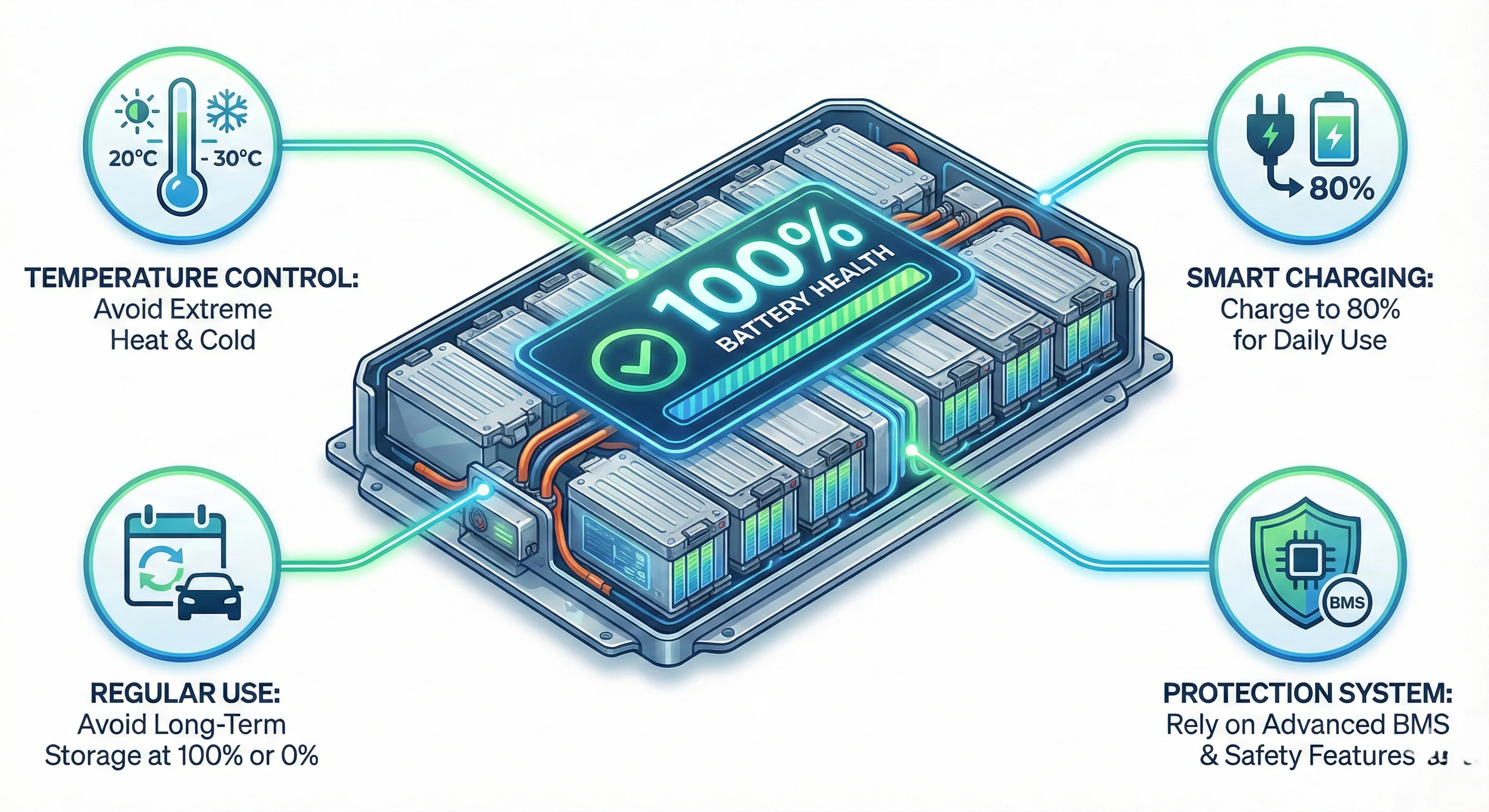
Aku Hoolduse Põhitõed
1. Lae Igapäevaseks Kasutamiseks 80%-ni
Liitiumioonakudele ei meeldi pikka aega täislaetuna seista. Regulaarne 100%-ni laadimine võib põhjustada kiiremat kulumist.
- Määrake oma igapäevane laadimispiirang 80% peale
- Laadige 100%-ni ainult siis, kui vajate reisiks lisasõiduulatust
- Enamik EV-sid võimaldab laadimispiiranguid seadetes määrata
- See praktika võib oluliselt pikendada aku eluiga
2. Ole Alati Laadimas (ABC)
Teie aku on kõige õnnelikum, kui see on vooluvõrku ühendatud, seega on tervislikum hoida seda vooluvõrgus, kui autot ei kasutata. See kehtib eriti siis, kui auto seisab pikemat aega.
- Ühendage vooluvõrku alati kui võimalik, isegi kui aku on täis
- Auto haldab laadimist automaatselt
- Hoiab ära "vampiirkulu" aku tühjendamise
- Võimaldab aku soojusjuhtimisel optimaalselt töötada
3. Kasuta Eelkonditsioneerimist
Eelkonditsioneerimine soojendab või jahutab teie akut optimaalse temperatuurini enne sõitmist, kasutades akuenergia asemel võrguenergiat.
Eelised:
- Mugav salongitemperatuur alustades
- Aku optimaalsel töötemperatuuril
- Parem efektiivsus ja sõiduulatus
- Vähendatud stress akule äärmuslikes ilmastikuoludes
4. Minimeeri DC Kiirlaadimist
Kiirlaadimisjaamad on vajalikud ja te ei tohiks kõhelda neid kasutamast. Siiski on need teie akule stressirohkemad kui aeglasem laadimine.
- Kasutage igapäevasteks vajadusteks Tase 2 (AC) laadimist
- Reserveerige DC kiirlaadimine maanteereisideks
- Sagedane kiirlaadimine kiirendab kulumist
- Kodune öine laadimine on akule kõige leebem
5. Väldi Tühjenemist 0%-ni
Liitiumioonakud võivad kahjustuda, kui need täielikult tühjeneda. Enamikul EV-del on kaitsepuhvrid, kuid siiski on parim vältida täielikku tühjenemist.
- Püüdke hoida akut võimalusel üle 20%
- Kui jõuate 0%-ni, ühendage vooluvõrku niipea kui võimalik
- Ärge jätke autot 0% juurde pikemaks ajaks seisma
- Planeerige laadimispeatused reisidel, et vältida liiga madalale langemist
6. Väldi Kuuma Aku Laadimist
Pärast kiiret sõitu või kuuma ilmaga võib teie aku temperatuur olla kõrge. Kuumana laadimine võib suurendada kulumist.
- Laske akul pärast rasket sõitu 15-30 minutit jahtuda
- Paljud EV-d haldavad seda automaatselt
- Laadimiskiirust võidakse vähendada, kuni aku jahtub
- Kuumal ajal parkige võimalusel varju
Pikaajaline Hoiustamine
Kui lähete ära või jätate auto pikemaks ajaks seisma:
Parim Praktika
- • Jätke vooluvõrku ühendatuks 50% laetuse juures
- • Määrake laadimispiirang 50%-le
- • Lülitage välja mittevajalikud funktsioonid
- • Kontrollige seda perioodiliselt
Kui Ei Saa Vooluvõrku Ühendada
- • Laadige enne lahkumist 50-60%-ni
- • Lülitage välja kõik mittehädavajalikud süsteemid
- • Lülitage välja kliimakaitse
- • Arvestage mõningase vampiirkuluga
Kokkuvõte
Kaasaegsed EV akud on loodud kestma sõiduki eluea minimaalse hooldusega. Nende parimate tavade järgimine aitab maksimeerida pikaealisust, kuid ärge stressake liiga palju - nautige oma EV-d! Kõige olulisemad asjad on: laadige igapäevaselt 80%-ni, ühendage vooluvõrku kui võimalik ja vältige äärmuslikke temperatuure ja äärmuslikke laetuse tasemeid.