Egy elektromos jármű vásárlása más tényezők figyelembevételét igényli, mint egy benzines autóé. Ez az átfogó útmutató mindent lefed, amit értékelnie kell a vásárlás előtt.
1 Hatótáv Követelmények
Mennyit vezet tipikusan egy nap? Ez a legfontosabb tényező.
Kérdések, Amelyeket Fel Kell Tenni:
- • Mekkora a napi ingázási távolsága?
- • Gyakran tesz hosszabb utakat?
- • Mekkora a leghosszabb tipikus útja?
- • Szüksége van hatótáv tartalékra a hideg időjáráshoz?
Ökölszabály: Válasszon olyan EV-t, amelynek hatótávja a napi vezetési távolságának 2-3-szorosa. Ha napi 40 mérföldet vezet, egy 200+ mérföldes EV bőven elegendő.
2 Töltési Hozzáférés
Tud tölteni otthon vagy a munkahelyén? Ez drámaian befolyásolja az EV tulajdonlási élményt.
Otthoni Töltés
Ideális forgatókönyv. Ébredés teljes töltöttséggel naponta. Legalacsonyabb töltési költség.
Munkahelyi Töltés
Remek kiegészítő vagy alternatíva az otthoni töltéshez. Gyakran ingyenes.
Csak Nyilvános
Megoldható, de kevésbé kényelmes. Magasabb költségek. Tervezést igényel.
Nincs Hozzáférés
Az EV tulajdonlás nagyon nehéz. Fontolja meg inkább a PHEV-t.
3 Költségvetés és Teljes Költség
Vegye Figyelembe a Teljes Életút Költséget (TCO)
Vételár: Az EV-k kezdetben többe kerülhetnek, de...
Ösztönzők: Szövetségi és helyi támogatások csökkenthetik az árat
Üzemanyag Megtakarítás: $800-1,500/év a benzinhez képest
Karbantartási Megtakarítás: $500-1,000/év a benzines autókhoz képest
Biztosítás: Gyakran hasonló vagy kissé magasabb
5 Éves TCO: Sok EV tulajdonlása kevesebbe kerül, mint az egyenértékű benzines járműveké, ha minden költséget figyelembe veszünk.
4 Jármű Méret és Típus
Mekkora járműre van szüksége? Az EV-k ma már minden formában és méretben kaphatók.
Kompakt/Szedán
Legjobb hatékonyság, alacsonyabb költség, városbarát
SUV/Crossover
Több hely, családbarát, sokoldalú
Teherautó (Pickup)
Vontatás, szállítás, munkaképesség
5 Helyi Infrastruktúra
Milyen a töltési infrastruktúra az ön területén?
Ellenőrizze:
- • Nyilvános töltők száma 10 mérföldön belül
- • DC gyorstöltők a gyakori útvonalain
- • Elérhető töltőhálózatok (Tesla, Electrify America stb.)
- • Munkahelyi töltési lehetőség
- • Vásárlási/étkezési helyszínek töltőkkel
Eszközök: Használja a PlugShare alkalmazást a töltők feltérképezéséhez
6 Éghajlat és Időjárás
Hogyan befolyásolja az éghajlat az EV teljesítményét?
Hideg Időjárás
- • A hatótáv 20-40%-kal csökkenhet extrém hidegben
- • Az előkondicionálás jelentősen segít
- • A hőszivattyúval felszerelt EV-k jobban teljesítenek
- • Számoljon extra hatótáv tartalékkal
Meleg Időjárás
- • A hatótáv 10-20%-kal csökkenhet extrém hőségben
- • A klíma használata befolyásolja a hatótávot
- • Az akkumulátor hőmenedzsmentje fontos
- • Kevésbé befolyásolja, mint a hideg időjárás
7 Funkciók és Technológia
Fontos EV-Specifikus Funkciók:
- • DC Gyorstöltési Sebesség: 50 kW minimum, 150+ kW ideális
- • Hőszivattyú: Jobb hatékonyság hideg időben
- • Egypedálos Vezetés: Kényelmes regeneratív fékezés
- • Előkondicionálás: Autó fűtése/hűtése indulás előtt
- • Útvonaltervezés: Beépített navigáció töltési megállókkal
- • Over-the-Air Frissítések: Szoftveres távoli fejlesztések
8 Új vs Használt
Új EV Előnyök
- • Teljes garancia (8-10 év akkumulátor)
- • Szövetségi adójóváírásra jogosult
- • Legújabb technológia
- • Hosszabb hatótáv opciók
Használt EV Előnyök
- • Alacsonyabb vételár
- • Kevesebb értékcsökkenés
- • Még van garancia
- • Bizonyított megbízhatósági adatok
Az Ön EV Vásárlási Döntési Keretrendszere
Az EV Remek, Ha:
- • Tud tölteni otthon vagy munkahelyen
- • A napi vezetés 200 mérföld alatt van
- • Jó a helyi töltési infrastruktúra
- • A legalacsonyabb üzemeltetési költségeket akarja
Fontolja Meg a PHEV-t, Ha:
- • Korlátozott a töltési hozzáférés
- • Gyakori hosszú utak (300+ mérföld)
- • Átmeneti lehetőséget szeretne
- • Maximális rugalmasságra van szüksége
Várjon az EV-vel, Ha:
- • Egyáltalán nincs töltési hozzáférés
- • Nagyon távoli területen él infrastruktúra nélkül
- • Gyakori távolsági vontatásra van szüksége
- • A költségvetés rendkívül szűk (fontolja meg a használtat)
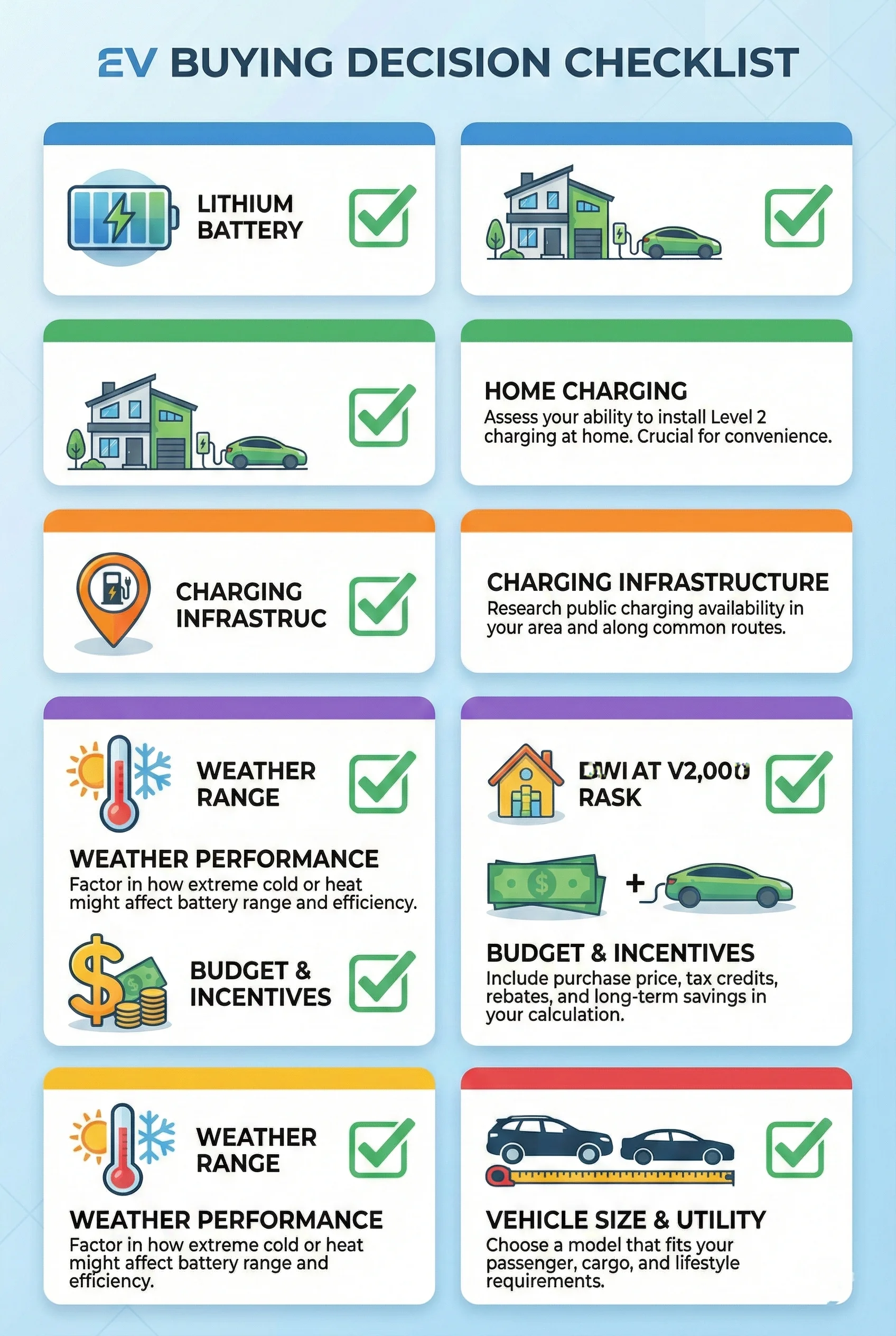
Végső Ellenőrzőlista
✓ Kiszámoltam a hatótáv szükségleteimet (2-3x napi vezetés)
✓ Megerősítettem a töltési hozzáférést (otthon/munka/nyilvános)
✓ Utánajártam a teljes birtoklási költségnek (TCO)
✓ Meghatároztam a szükséges méretet/típust
✓ Ellenőriztem a helyi töltési infrastruktúrát
✓ Figyelembe vettem az éghajlati hatásokat
✓ Áttekintettem az elérhető ösztönzőket
✓ Tesztvezettem a preferált modelleket