The automotive industry is transitioning through various stages of electrification. Understanding the differences between traditional gas vehicles, hybrids, plug-in hybrids, and fully electric vehicles helps you choose the right option.
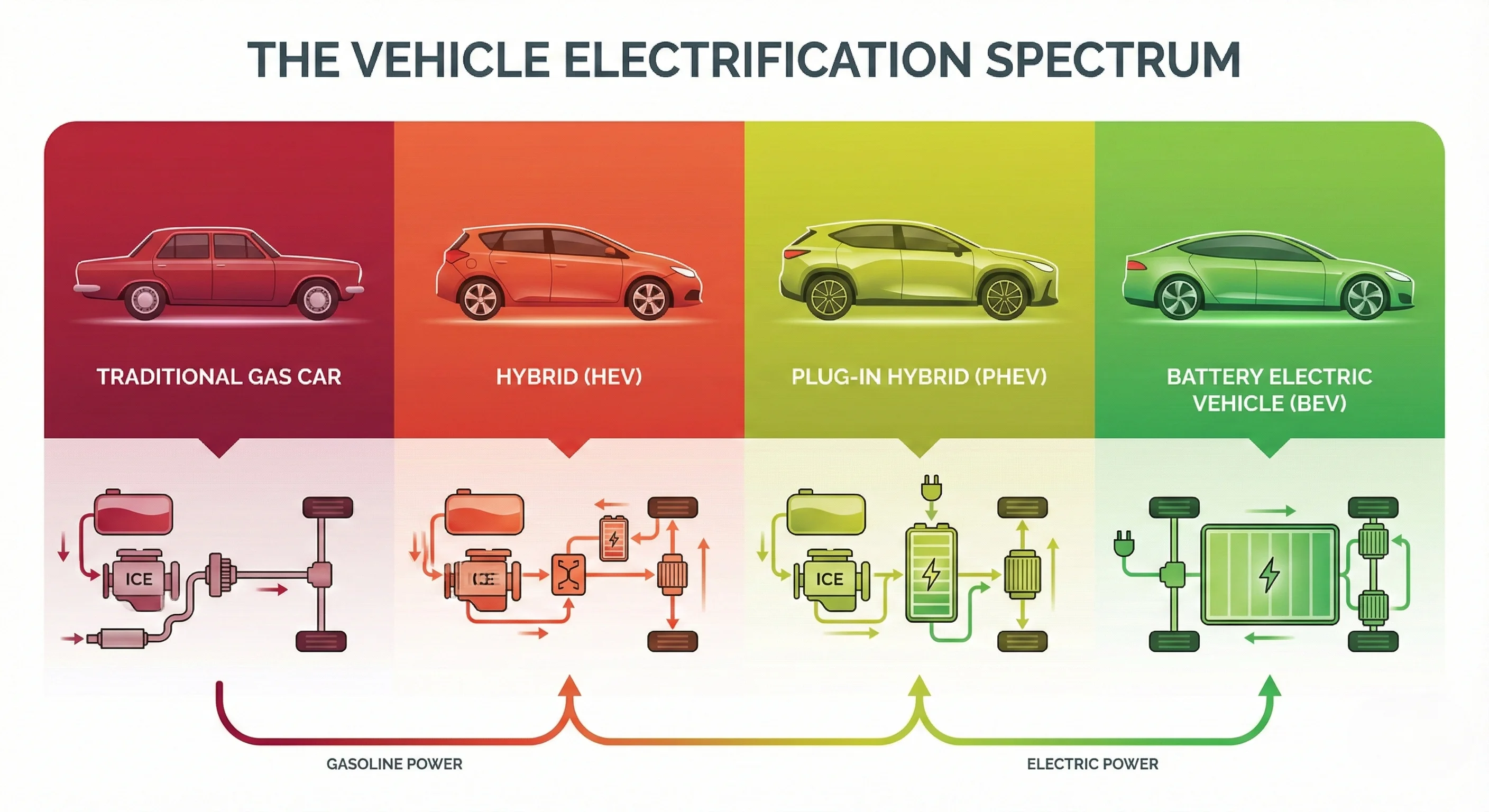
1. Traditional Gas/Diesel Vehicles
How It Works
Internal combustion engine burns gasoline or diesel to create power. No electric components for propulsion.
- 100% gasoline/diesel powered
- 20-30% efficient
- Regular refueling at gas stations
- Highest emissions
2. Hybrid Electric Vehicles (HEV)
How It Works
Combines gas engine with small electric motor and battery. Cannot be plugged in - battery charged only through regenerative braking and engine.
Examples: Toyota Prius, Honda Accord Hybrid, Ford Maverick Hybrid
- 30-50% better fuel economy than gas
- No charging required
- Electric motor assists gas engine
- Still requires all gas car maintenance
3. Plug-in Hybrid Electric Vehicles (PHEV)
How It Works
Larger battery and electric motor than HEV. Can be plugged in to charge. Drives on electric power for 20-60+ miles, then switches to gas engine.
Examples: Toyota RAV4 Prime, Jeep Wrangler 4xe, Ford Escape PHEV, Volvo XC60 Recharge
- Electric-only range: 20-60+ miles
- Gas engine for longer trips
- Best of both worlds for many drivers
- Still has complex gas engine maintenance
4. Battery Electric Vehicles (BEV)
How It Works
Runs entirely on battery power. No gas engine at all. Must be plugged in to charge. Zero emissions.
Examples: Tesla Model 3, Nissan Leaf, Ford Mustang Mach-E, Chevrolet Bolt, Hyundai Ioniq 5
- Range: 200-400+ miles
- Zero tailpipe emissions
- Lowest operating costs
- Minimal maintenance required
- Requires charging access
Comparison Table
| Feature | HEV | PHEV | BEV |
|---|---|---|---|
| Can Plug In? | No | Yes | Yes (required) |
| Electric Range | 1-2 miles | 20-60+ miles | 200-400+ miles |
| Has Gas Engine? | Yes | Yes | No |
| Maintenance | High | High | Low |
| Emissions | Lower than gas | Very low (if charged) | Zero tailpipe |
Which Is Right for You?
HEV: Better fuel economy than gas, no charging infrastructure needed, familiar refueling
PHEV: Electric for daily driving, gas for long trips, transition option for those unsure about full EV
BEV: Lowest operating costs, best for environment, best driving experience, requires charging access