Akun kapasiteetin ja latausnopeuden ymmärtäminen on olennaista sähköautojen teknisten tietojen ymmärtämiseksi. Nämä kaksi tekijää määrittävät, kuinka pitkälle voit ajaa ja kuinka nopeasti voit ladata.
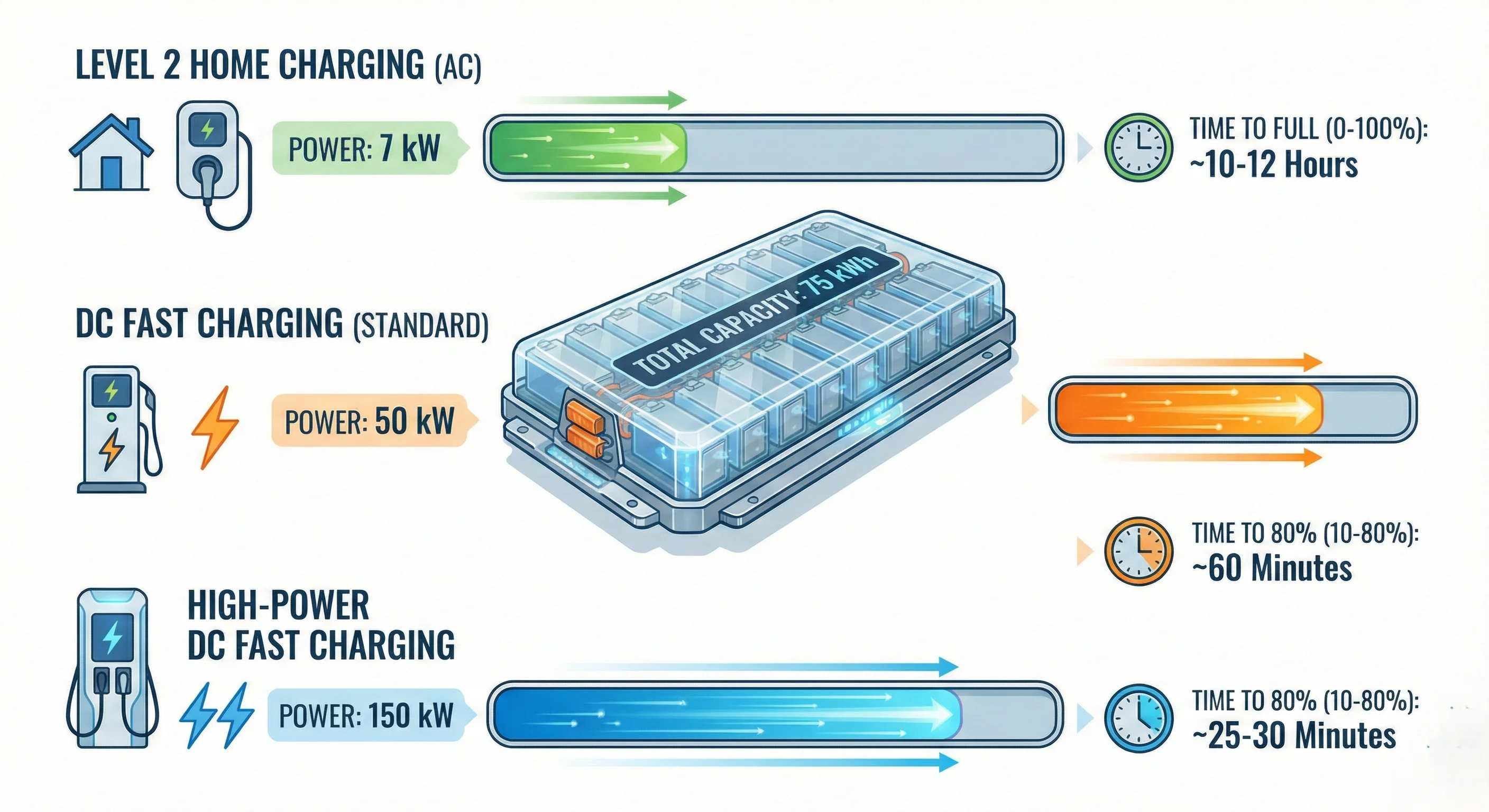
Akun Kapasiteetti (kWh)
Mikä on kWh?
kWh (kilowattitunti) on yksikkö, jolla mitataan akun kapasiteettia - pohjimmiltaan "säiliön koko". Yksi kWh on energiamäärä, jonka 1,000 watin laite kuluttaa käydessään yhden tunnin ajan.
Ajattele sitä kuin gallonoita bensatankissa: suurempi akku (enemmän kWh) varastoi enemmän energiaa ja tarjoaa pidemmän toimintamatkan, aivan kuten suurempi bensatankki pitää sisällään enemmän polttoainetta.
Pienet Akut (40-60 kWh)
Range: Toimintamatka: 150-250 mailia
Examples: Nissan Leaf, Mini Cooper SE, Mazda MX-30
Best for: Kaupunkiajo, lyhyet työmatkat, kakkosautot
Advantages: Alhaisempi kustannus, nopeampi lataus (pienempi akku = vähemmän ladattavaa)
Keskikokoiset Akut (60-80 kWh)
Range: Toimintamatka: 250-350 mailia
Examples: Tesla Model 3/Y Standard Range, Chevrolet Bolt, VW ID.4
Best for: Päivittäinen ajo satunnaisilla maantiematkoilla
Advantages: Hyvä tasapaino toimintamatkan, kustannusten ja latausajan välillä
Suuret Akut (80-100+ kWh)
Range: Toimintamatka: 300-400+ mailia
Examples: Tesla Model S/X, Ford F-150 Lightning Extended Range, BMW iX
Best for: Toistuva pitkän matkan matkustaminen, hinaus, maksimaalinen joustavuus
Advantages: Maksimaalinen toimintamatka, harvempi lataustarve
Käytettävissä oleva vs. Kokonaiskapasiteetti
Important: Akun kokonaiskapasiteetti ei ole sama kuin käytettävissä oleva kapasiteetti. Valmistajat sisällyttävät puskurivyöhykkeitä suojellakseen akun terveyttä.
Example: Akulla, jota mainostetaan 75 kWh:n akuksi, saattaa olla:
- Kokonaiskapasiteetti: 77 kWh (todellinen fyysinen kapasiteetti)
- Käytettävissä oleva kapasiteetti: 75 kWh (mitä voit oikeasti käyttää)
- Puskuri: 2 kWh varattu suojaamaan akkua vaurioilta
Tämä puskuri estää akkua tyhjentymästä kokonaan (mikä vahingoittaa litiumioniakkuja) ja pidentää akun yleistä käyttöikää.
Latausnopeus (kW)
Mikä on kW?
kW (kilowatti) mittaa energiansiirron nopeutta - kuinka nopeasti energia virtaa akkuun. Korkeampi kW = nopeampi lataus.
Ajattele sitä kuin veden virtausta: kWh on ämpärin koko, kW on kuinka leveä letku on. Leveämpi letku (korkeampi kW) täyttää ämpärin nopeammin.
Taso 1 (1.4-1.9 kW)
Vakio 120V pistorasia
Example: 60 kWh akku
- • ~3-5 mailia/tunti lisätään
- • 30-40 tuntia täyteen lataukseen
- • Vain hätätilanteisiin/yön yli
Taso 2 (7-11 kW)
240V koti/julkinen laturi
Example: 60 kWh akku
- • ~25-40 mailia/tunti lisätään
- • 6-8 tuntia täyteen lataukseen
- • Ihanteellinen päivittäiseen lataukseen
DC Pikalataus (50-350 kW)
Julkiset pikalaturit
Example: 60 kWh akku
- • ~150-1000 mailia/tunti lisätään
- • 20-40 min 80%:iin
- • Maantiematkat & nopeat pysähdykset
Latausajan Laskeminen
Peruskaava
Latausaika = Akun Kapasiteetti ÷ Latausteho
Aika (tuntia) = kWh ÷ kW
Esimerkki 1: Kotilataus
75 kWh akku, 7.2 kW laturi, lataus 20%:sta 80%:iin
• Tarvittava energia: 75 kWh × 60% = 45 kWh
• Aika: 45 kWh ÷ 7.2 kW = 6.25 tuntia
Esimerkki 2: DC Pikalataus
75 kWh akku, 150 kW laturi, lataus 10%:sta 80%:iin
• Tarvittava energia: 75 kWh × 70% = 52.5 kWh
• Aika (jos vakio): 52.5 kWh ÷ 150 kW = 0.35 tuntia = ~21 minuuttia
*Huom: Todellinen aika voi olla pidempi latauskäyrän vuoksi
Reality Check: Tämä kaava antaa teoreettisen minimin. Todelliseen lataukseen vaikuttavat lämpötila, akun varaustila, laturin jakaminen ja latauskäyrä (nopeus hidastuu akun täyttyessä).
Mikä Rajoittaa Latausnopeutta?
Ajoneuvon Rajoitukset
- • Maks. AC-latausnopeus: Rajoitettu ajoneuvon sisäisellä laturilla (tyypillisesti 7-11 kW)
- • Maks. DC-latausnopeus: Ajoneuvokohtainen (50-250+ kW)
- • Akun lämpötila: Kylmät akut latautuvat hitaammin
- • Varaustila: Hidastuu merkittävästi 80% jälkeen
Ulkoiset Rajoitukset
- • Laturin teho: Ei voi ylittää laturin maksimitehoa
- • Jaetut piirit: Teho jaetaan useiden autojen kesken
- • Verkkokapasiteetti: Paikallinen sähköinfrastruktuuri rajoittaa
- • Kaapelin luokitus: Kaapelin on tuettava tehotasoa
Key Point: Latausnopeutesi rajoittuu aina alhaisimpaan arvoon. 350 kW laturi ei lataa autoa, jonka maksiminopeus on 50 kW, yhtään nopeammin kuin 50 kW laturi.
Tehokkuus: Mailia per kWh
Aivan kuten MPG bensiiniautoille, sähköautoilla on tehokkuusluokitus, jota mitataan maileina per kWh (tai kWh per 100 mailia). Tämä kertoo, kuinka pitkälle voit mennä kullakin kWh:lla energiaa.
Tehokkaat Sähköautot
4-5 mailia/kWh
Kompaktit autot, sedanit
Example: Tesla Model 3, Hyundai Ioniq 6
Keskitason Sähköautot
2.5-3.5 mailia/kWh
Katumaasturit, crossoverit
Example: Ford Mustang Mach-E, VW ID.4
Vähemmän Tehokkaat
1.5-2.5 mailia/kWh
Suuret katumaasturit, lava-autot
Example: Rivian R1T, GMC Hummer EV
Toimintamatkan Laskeminen
Kaava: Toimintamatka = Akun Kapasiteetti × Tehokkuus
Esimerkki: 75 kWh akku × 3 mailia/kWh = 225 mailia toimintamatkaa
*Todellinen toimintamatka vaihtelee ajotavan, sään, maaston ja nopeuden mukaan
Pikaviite
kWh (Akun Kapasiteetti): "Säiliön" koko - määrittää kokonaistoimintamatkan
kW (Latausteho): Latausnopeus - määrittää kuinka nopeasti tankkaat
mailia/kWh (Tehokkuus): Kuinka pitkälle pääset energiayksikköä kohti - kuten MPG
Latausaika: Akun kapasiteetti ÷ Latausteho (todellisilla vaihteluilla)
Ihanteellinen: 60-80 kWh akku 7-11 kW kotilatauksella useimmille kuljettajille