Elektromobilis (EV) yra transporto priemonė, kuri naudoja vieną ar daugiau elektrinių variklių judėjimui vietoje vidaus degimo variklio. Šios transporto priemonės yra varomos elektra, saugoma baterijose, pašalinant benzino ar dyzelino poreikį. Elektromobiliai atstovauja fundamentalų pokytį mūsų požiūryje į asmeninį transportą, siūlydami švaresnį, efektyvesnį ir dažnai malonesnį vairavimą.
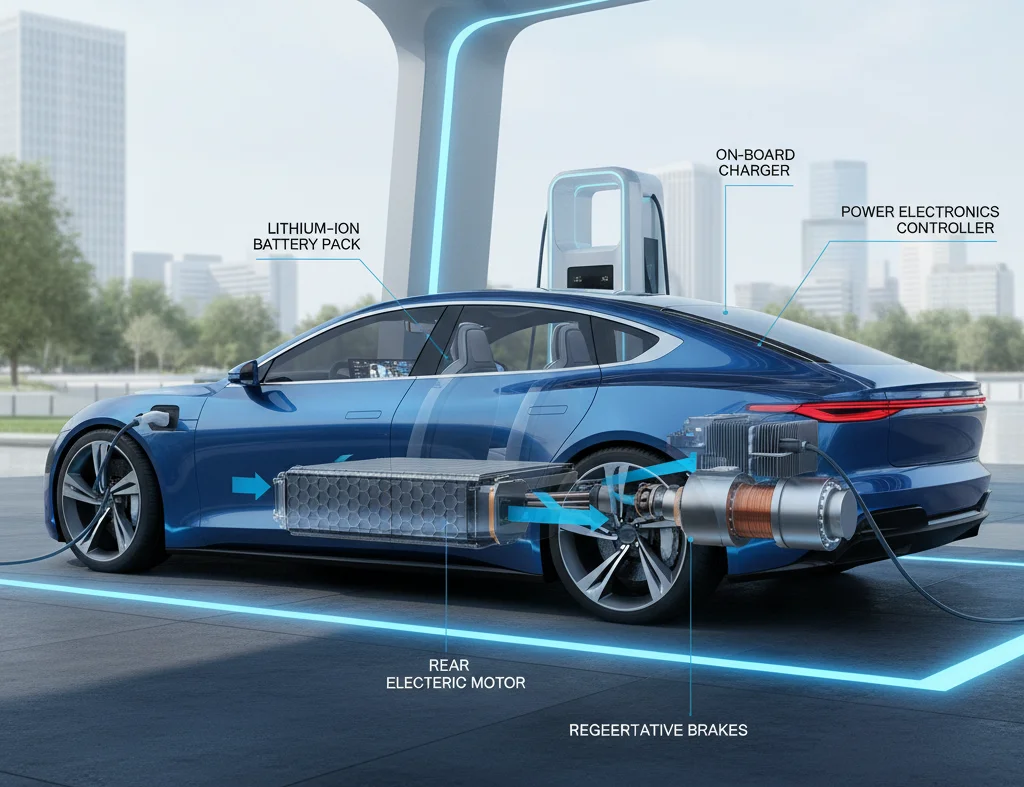
Pagrindiniai EV Komponentai
1. Baterijų Blokas
Elektromobilio širdis. Tai didelis ličio jonų baterijų blokas (panašus į jūsų telefono bateriją, bet daug didesnis), kuris saugo elektros energiją automobilio varymui.
- Paprastai montuojamas po grindimis optimaliam svorio paskirstymui
- Talpa matuojama kilovatvalandėmis (kWh)
- Didesnė talpa = ilgesnis nuvažiuojamas atstumas
- Paprastai suteikiama 8-10 metų arba 160,000 km garantija
2. Elektrinis Variklis
Paverčia elektros energiją iš baterijos į mechaninę energiją ratams sukti. Daug paprastesnis nei benzininis variklis su žymiai mažiau judančių dalių.
- Suteikia momentinį sukimo momentą (staigią galią)
- Ypač efektyvus (85-90% lyginant su 20-30% benzininiams varikliams)
- Beveik tylus veikimas
- Taip pat gali veikti atvirkščiai kaip generatorius (rekuperacinis stabdymas)
3. Inverteris / Galios Elektronika
Paverčia DC (nuolatinę) srovę iš baterijos į AC (kintamąją) srovę varikliui ir valdo galios srautą visame automobilyje.
4. Vidinis Įkroviklis
Paverčia AC srovę iš įkrovimo stotelių į DC srovę baterijai įkrauti. Galvokite apie tai kaip apie sudėtingą adapterį.
5. Šilumos Valdymo Sistema
Palaiko bateriją ir variklį optimalioje veikimo temperatūroje našumui ir ilgaamžiškumui užtikrinti.
6. Įkrovimo Prievadas (Lizdas)
Vieta, kur prijungiate automobilį įkrovimui, panašiai kaip kraunate telefoną.

Elektromobilių Tipai
Baterijiniai Elektromobiliai (BEV)
Visiškai elektrinės transporto priemonės be jokio benzininio variklio. Jos varomos tik baterijos energija ir turi būti įkraunamos iš tinklo.
Pavyzdžiai: Tesla Model 3, Nissan Leaf, Ford Mustang Mach-E, Chevrolet Bolt
Kai žmonės sako "EV", jie dažniausiai turi omenyje BEV
Įkraunami Hibridiniai Elektromobiliai (PHEV)
Turi tiek elektrinį variklį su baterija, TIEK benzininį variklį. Gali nuvažiuoti 30-80 km vien elektra, tada persijungia į benziną.
Pavyzdžiai: Toyota RAV4 Prime, Jeep Wrangler 4xe, Ford Escape PHEV
Hibridiniai Elektromobiliai (HEV)
Turi mažą elektrinį variklį padedantį benzininiam, bet negali būti įkraunami iš tinklo. Baterija kraunama tik rekuperacijos metu.
Pavyzdžiai: Toyota Prius, Honda Accord Hybrid
Nors techniškai tai "elektrinės transporto priemonės", jos dažniausiai vadinamos tiesiog "hibridais", kad atskirtų nuo BEV
Kaip Veikia Elektromobiliai
Vairavimo Procesas
- Spaudžiate akceleratorių: Siunčiamas signalas galios elektronikai
- Galios elektronika: Paima elektrą iš baterijos ir paverčia tinkama įtampa
- Elektrinis variklis: Priima energiją ir sukuria sukimosi jėgą (sukimo momentą)
- Pavara: Perduoda galią į ratus
- Atleidžiate akceleratorių: Variklis persijungia į generatoriaus režimą, sugaudydamas kinetinę energiją ir grąžindamas ją į bateriją (rekuperacinis stabdymas)
Esminiai Skirtumai nuo Benzininių Automobilių
- Jokių bėgių: Dauguma EV naudoja vieno bėgio transmisiją. Galia visada pasiekiama akimirksniu bet kokiu greičiu
- Rekuperacinis stabdymas: Lėtėjimas sugrąžina energiją vietoje to, kad švaistytų ją kaip šilumą
- Tylus veikimas: Jokio variklio triukšmo, jokios vibracijos
- Momentinis sukimo momentas: Maksimali galia pasiekiama nuo nulio apsukų

Kodėl Elektromobiliai Svarbūs
Aplinkosauginė Nauda
- • Jokių išmetamųjų dujų – geresnė oro kokybė
- • 50-70% mažesnės viso ciklo emisijos nei benzininių automobilių
- • Tampa švaresni, kai elektros tinklas naudoja daugiau atsinaujinančios energijos
- • Mažina priklausomybę nuo iškastinio kuro
Ekonominė Nauda
- • Elektra kainuoja 3-5x mažiau nei benzinas nuvažiuotam kilometrui
- • 40% mažesnės priežiūros išlaidos
- • Valstybinės subsidijos mažina pirkimo kainą
- • Mažesnė bendra nuosavybės kaina (TCO) per automobilio gyvavimo laiką
Našumo Privalumai
- • Momentinis pagreitis ir jautrus valdymas
- • Sklandus, tylus, rafinuotas vairavimo pojūtis
- • Žemas svorio centras suteikia puikų stabilumą
- • Net baziniai EV jaučiasi greiti ir sportiški
Patogumo Privalumai
- • Kraukite namuose naktį kaip telefoną
- • Pabuskite su "pilnu baku" kiekvieną rytą
- • Jokių degalinių lankymo kasdieniam važinėjimui
- • Mažiau laiko praleidžiama servisuose