Elektroauto (EV) ir transportlīdzeklis, kas izmanto vienu vai vairākus elektromotorus piedziņai nevis iekšdedzes dzinēju. Šie transportlīdzekļi tiek darbināti ar elektrību, kas uzglabāta baterijās, novēršot nepieciešamību pēc benzīna vai dīzeļdegvielas. Elektroauto pārstāv fundamentālu maiņu tajā, kā mēs domājam par personīgo transportu, piedāvājot tīrāku, efektīvāku un bieži vien baudāmāku braukšanas pieredzi.
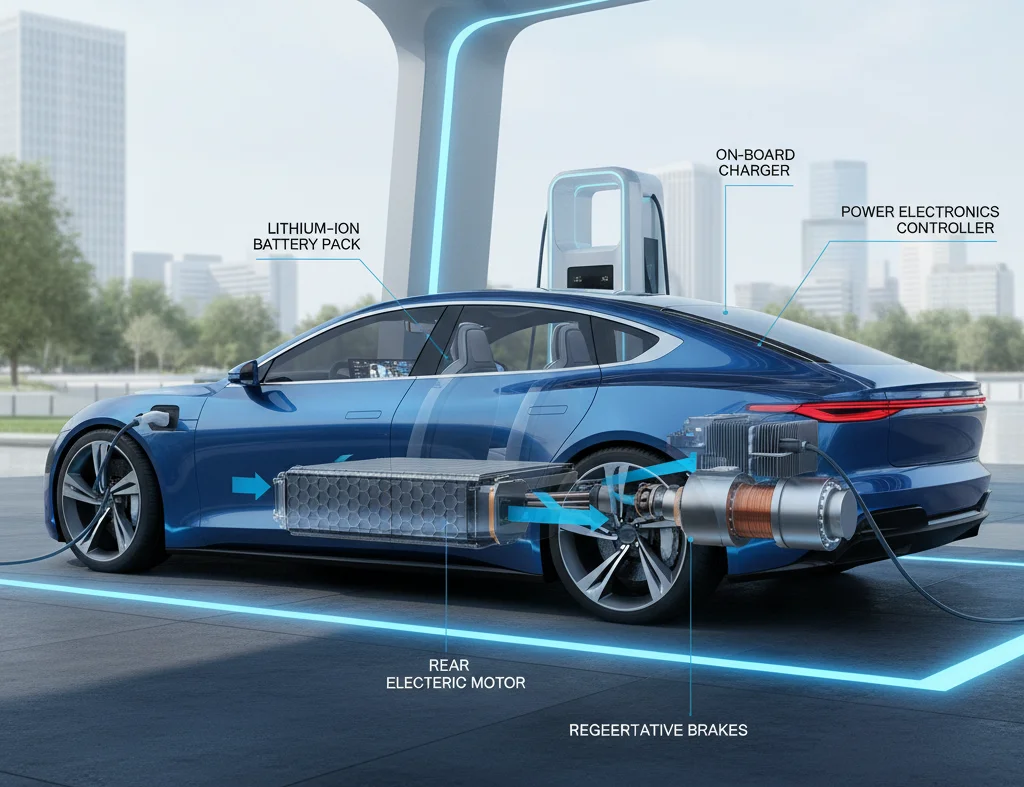
EV Galvenie Komponenti
1. Bateriju Paka
Elektroauto sirds. Šī lielā litija jonu bateriju paka (līdzīga, bet daudz lielāka nekā jūsu telefona baterija) uzglabā elektroenerģiju, kas darbina transportlīdzekli.
- Parasti uzstādīta zem grīdas optimālai svara sadalīšanai
- Kapacitāte mērīta kilovatstundās (kWh)
- Lielāka kapacitāte = garāks nobraukums
- Parasti ar garantiju uz 8-10 gadiem vai 160,000+ km
2. Elektromotors
Pārvērš elektroenerģiju no baterijas mehāniskajā enerģijā, lai grieztu riteņus. Daudz vienkāršāks par benzīna dzinēju ar daudz mazāk kustīgām daļām.
- Sniedz tūlītēju griezes momentu (zibenīgu jaudu)
- Ārkārtīgi efektīvs (85-90% pret 20-30% benzīna dzinējiem)
- Gandrīz klusa darbība
- Var darboties arī apgriezti kā ģenerators (rekuperatīvā bremzēšana)
3. Invertors/Spēka Elektronika
Pārvērš DC strāvu no baterijas AC strāvā motoram un pārvalda enerģijas plūsmu transportlīdzeklī.
4. Iebūvētais Lādētājs
Pārvērš AC strāvu no uzlādes stacijām DC strāvā, lai uzlādētu bateriju. Uztveriet to kā izsmalcinātu adapteri.
5. Termiskās Pārvaldības Sistēma
Uztur bateriju un motoru optimālā darba temperatūrā veiktspējai un ilgmūžībai.
6. Uzlādes Ports
Kur jūs pieslēdzat, lai uzlādētu transportlīdzekli, līdzīgi kā lādējat telefonu.

Elektroauto Veidi
Bateriju Elektroauto (BEV)
Pilnībā elektriski transportlīdzekļi bez benzīna dzinēja. Tie darbojas pilnībā ar baterijas enerģiju un ir jāpieslēdz uzlādei.
Piemēri: Tesla Model 3, Nissan Leaf, Ford Mustang Mach-E, Chevrolet Bolt
Kad cilvēki saka "EV," viņi parasti domā BEV
Uzlādējamie Hibrīdauto (PHEV)
Ir gan elektromotors ar bateriju, GAN benzīna dzinējs. Var nobraukt 30-80 km tikai ar elektrību, tad pārslēdzas uz benzīnu.
Piemēri: Toyota RAV4 Prime, Jeep Wrangler 4xe, Ford Escape PHEV
Hibrīdauto (HEV)
Ir mazs elektromotors, lai palīdzētu benzīna dzinējam, bet to nevar pieslēgt rozetei. Baterija uzlādējas tikai caur rekuperatīvo bremzēšanu.
Piemēri: Toyota Prius, Honda Accord Hybrid
Lai gan tehniski "elektroauto," tos parasti sauc vienkārši par "hibrīdiem," lai atšķirtu no BEV
Kā Darbojas Elektroauto
Braukšanas Process
- Nospiežot akseleratoru: Signāls nosūtīts uz spēka elektroniku
- Spēka elektronika: Ņem elektrību no baterijas un pārvērš pareizā spriegumā
- Elektromotors: Saņem enerģiju un rada rotācijas spēku (griezes momentu)
- Piedziņa: Pārnes jaudu uz riteņiem
- Atlaižot akseleratoru: Motors pārslēdzas ģeneratora režīmā, uztverot kinētisko enerģiju un uzglabājot to atpakaļ baterijā (rekuperatīvā bremzēšana)
Galvenās Atšķirības no Benzīna Auto
- Nav pārnesumu: Vairums EV izmanto viena ātruma transmisiju. Jauda vienmēr ir pieejama nekavējoties jebkurā ātrumā
- Rekuperatīvā bremzēšana: Ātruma samazināšana atgūst enerģiju, nevis iznieko to kā siltumu
- Klusa darbība: Nav dzinēja trokšņa, nav vibrācijas
- Tūlītējs griezes moments: Maksimālā jauda pieejama no nulles apgriezieniem

Kāpēc Elektroauto ir Svarīgi
Vides Ieguvumi
- • Nulles izplūdes emisijas uzlabo gaisa kvalitāti
- • 50-70% zemākas dzīves cikla emisijas nekā benzīna transportlīdzekļiem
- • Kļūst tīrāki, elektrotīklam pievienojot atjaunojamo enerģiju
- • Samazina atkarību no fosilā kurināmā
Ekonomiskie Ieguvumi
- • Elektrība izmaksā 3-5x mazāk nekā benzīns uz kilometru
- • 40% zemākas apkopes izmaksas
- • Valsts un pašvaldību atbalsts samazina iegādes cenu
- • Zemākas kopējās īpašumaizmaksas transportlīdzekļa mūža laikā
Veiktspējas Ieguvumi
- • Tūlītējs paātrinājums un atsaucīga vadāmība
- • Plūdena, klusa, izsmalcināta braukšanas pieredze
- • Zems smaguma centrs nodrošina izcilu stabilitāti
- • Pat vienkārši EV jūtas ātri un sportiski
Ērtību Ieguvumi
- • Uzlādējiet mājās pa nakti kā savu telefonu
- • Mostieties ar "pilnu bāku" katru rītu
- • Vairs nekādu degvielas uzpildes staciju apmeklējumu ikdienas braukšanai
- • Mazāk laika pavadīts apkopēs