Lielākā daļa cilvēku domā, ka elektroauto ir jauns izgudrojums, bet patiesība ir daudz interesantāka. Elektroauto pastāv kopš automobiļa rītausmas - tie vienkārši veica gadsimtu ilgu "līkumu", pirms atgriezās slavas virsotnē.
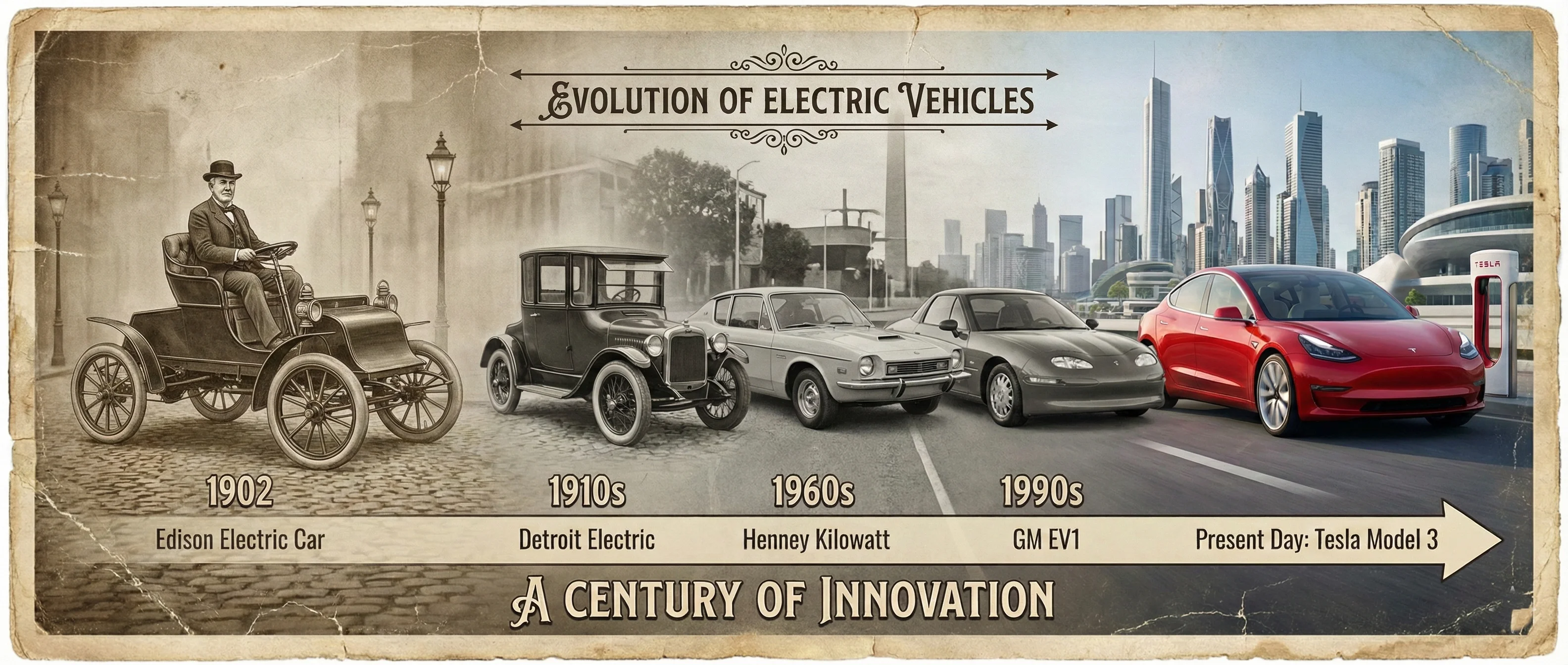
EV Laika Līnija
Elektriskais Laikmets Sākas
1830-1840-tajos gados izgudrotāji Nīderlandē, Ungārijā un ASV eksperimentēja ar maza mēroga elektroauto.
Līdz 1890-tajiem EV kļuva praktiski un populāri. Tie bija tīri, klusi, viegli darbināmi un neprasīja benzīna auto kloķa startēšanu.
- 1890: Viljams Morisons no demoinas, Aiovas, rada pirmo praktisko elektroauto ASV
- 1897: Ņujorkā parādās elektriskie taksometri
- 1899: Elektroauto pārspēj 100 km/h ātruma barjeru
- 1900: EV veido apmēram trešdaļu no visiem transportlīdzekļiem uz ceļa
EV Popularitātes Virsotne
Agrie 1900-tie faktiski bija elektroauto zelta laikmets. Daudzi vadītāji tos deva priekšroku lietošanas ērtuma un uzticamības dēļ.
- Tomass Edisons un Henrijs Fords bija draugi; Edisons strādāja pie EV bateriju uzlabošanas, kamēr Fords pilnveidoja benzīna auto
- EV bija īpaši populāri sieviešu vadītāju vidū, jo tie neprasīja bīstamo kloķa startēšanu
- Lielie ražotāji kā Baker Electric un Detroit Electric ražoja tūkstošiem EV
- Līdz 1912. gadam ASV bija reģistrēti apmēram 34,000 elektroauto
EV Tumšie Laiki
Vairāki faktori noveda pie elektroauto norieta un benzīna auto dominances:
- Elektriskais starteris: Čārlzs Keterings 1912. gadā izgudroja elektrisko starteri benzīna auto, likvidējot vienu no galvenajām EV priekšrocībām
- Lēta nafta: Naftas atklāšana Teksasā un Oklahomā padarīja benzīnu ļoti lēti
- Labāki ceļi: Uzlabota ceļu infrastruktūra deva priekšroku benzīna auto garākam nobraukumam
- Masveida ražošana: Henrija Forda konveijers padarīja benzīna auto pieejamus masām
- Ap 1935: Elektroauto bija praktiski izzuduši no ceļiem
Pirmie Atdzimšanas Mēģinājumi
1970-to gadu naftas krīze izraisīja atjaunotu interesi par alternatīvām benzīnam.
- Vairāki ražotāji ražoja ierobežotas sērijas elektroauto
- Vairumam bija ļoti ierobežots nobraukums (65-100 km) un izmantoja svina-skābes baterijas
- Augstās izmaksas un vājā veiktspēja liedz tiem kļūt populāriem
- CitiCar kļuva par visvairāk ražoto EV šajā ērā (apmēram 4,400 vienības)
Modernie EV Parādās
Kalifornijas Nulles Emisiju Transportlīdzekļu (ZEV) mandāts spieda autoražotājus attīstīt praktiskus EV.
GM izlaida EV1 1996. gadā - pirmais masveidā ražotais modernās ēras EV. Tas bija revolucionārs, bet galu galā tika atcelts 2003. gadā.
- Toyota RAV4 EV (1997): Ierobežotas ražošanas elektriskais SUV
- Honda EV Plus (1997): Tikai līzingam pieejams elektroauto
- Šie transportlīdzekļi pierādīja, ka EV var būt praktiski, bet bateriju tehnoloģija vēl nebija gatava
- Vairums agrīno EV tika atsaukti un iznīcināti, sarūgtinot agrīnos piekritējus
Tesla Efekts
Viss mainījās, kad Silīcija ielejas jaunuzņēmums nolēma būvēt elektrisku sporta auto.
- 2008: Tesla izlaiž Roadster, pierādot, ka EV var būt ātri, pievilcīgi un ar 320+ km nobraukumu
- 2010: Nissan Leaf tiek atklāts kā pirmais masveida modernais EV (pieejams, bet praktisks)
- 2010: Chevrolet Volt tiek ieviests kā uzlādējamais hibrīds
- Litija jonu bateriju tehnoloģija beidzot padara tāla nobraukuma EV praktiskus
- Patērētāju uztvere sāk mainīties
Masveida Izrāviens
2010-tie redzēja eksponenciālu izaugsmi EV pieņemšanā un tehnoloģiju uzlabojumos.
- 2012: Tesla Model S tiek atklāts, uzstādot jaunus standartus EV
- 2014: BMW i3 un VW e-Golf ienes EV no tradiconāliem zīmoliem
- 2017: Tesla Model 3 atnes Tesla tehnoloģiju par masveida cenām
- 2018: Audi e-tron, Jaguar I-PACE parāda, ka luksusa zīmoli uztver EV nopietni
- Ķīna kļūst par pasaules līderi EV ražošanā un pieņemšanā
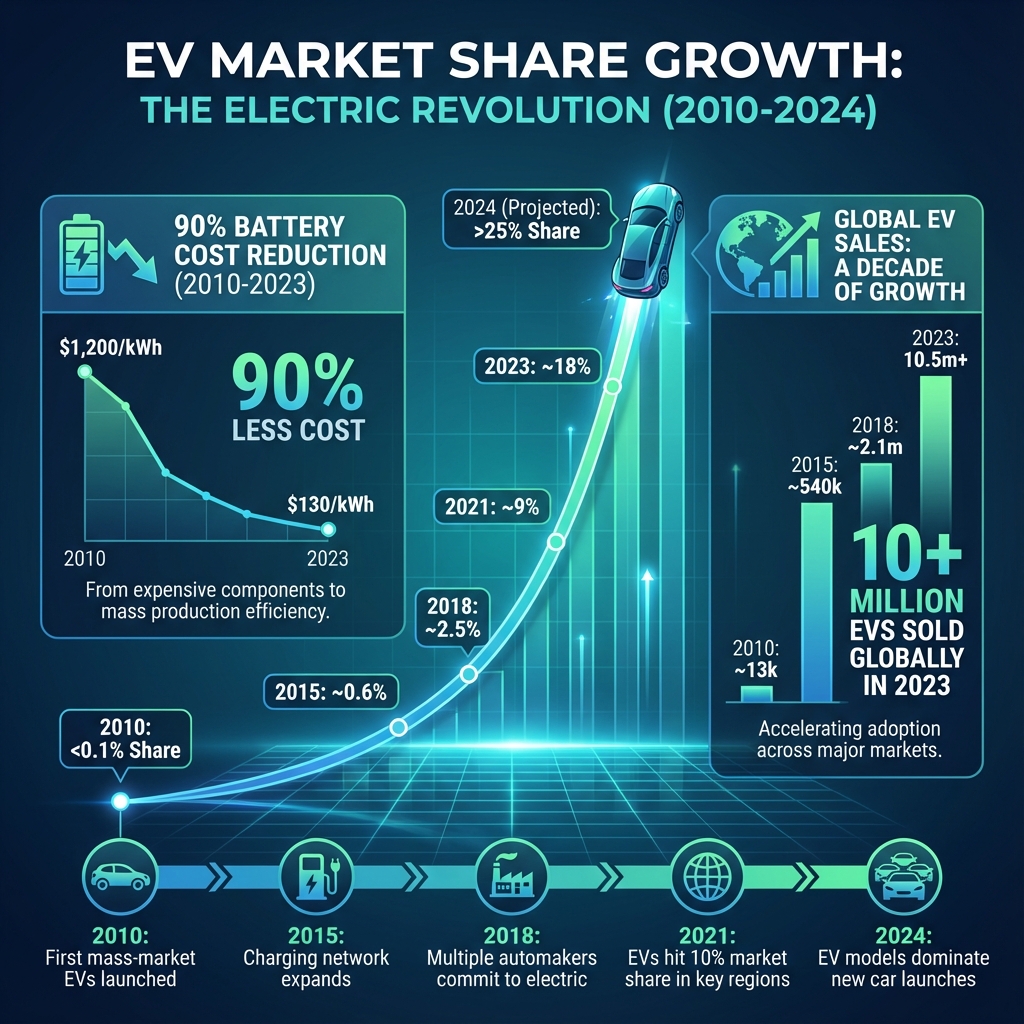
- Bateriju izmaksas krītas par 87% no 2010. līdz 2019. gadam
Elektriskā Revolūcija
EV pāriet no alternatīvas uz pamatplūsmu rekorda laikā.
- 2020-2021: Lielie autoražotāji apņemas pilnībā elektriskai nākotnei
- 2022: Ford F-150 Lightning pierāda, ka EV var veikt smago darbu pienākumus
- 2023: Globālā EV pārdošana pārsniedz 10 miljonus vienību gadā
- Lielie ražotāji paziņo plānus atteikties no benzīna auto līdz 2030-2035. gadam
- EV tirgus daļa Norvēģijā pārsniedz 80%, parādot, kas ir iespējams
- Uzlādes infrastruktūra strauji paplašinās visā pasaulē
EV Noslēdz Loku
Vairāk nekā 120 gadus pēc to pirmās virsotnes, elektroauto beidzot realizē savu potenciālu. Uzlabota bateriju tehnoloģija, vides bažas un uzlabota veiktspēja ir apvienojušās, lai padarītu EV ne tikai dzīvotspējīgus, bet pārākus par benzīna auto vairumā gadījumu.
Mācības no Vēstures
Tehnoloģija Prasa Laiku
EV vajadzēja vairāk nekā gadsimtu bateriju attīstības, lai kļūtu patiesi praktiski. Litija jonu baterijas bija izrāviens, kas padarīja modernus EV iespējamus.
Infrastruktūra ir Svarīga
Elektriskās infrastruktūras trūkums lauku apvidos palīdzēja benzīna auto dominēt. Šodien elektrība ir visur, dodot EV fundamentālu priekšrocību.
Ekonomika Virza Pieņemšanu
Lēta nafta nogalināja agrīnos EV. Šodien dārga nafta un krītošas bateriju cenas padara EV ekonomiski pārākus.
Dažreiz Nākotne ir Cikliska
Tas, kas reiz bija dominējošs, tad novecojis, var kļūt dominējošs atkal ar pareizo tehnoloģiju un apstākļiem. Elektriskā piedziņa bija pareizā atbilde 1900. gadā, un tā ir pareizā atbilde šodien.