Paljud inimesed arvavad, et elektrisõidukid on uus leiutis, kuid tõde on palju huvitavam. Elektrisõidukid on olnud olemas alates auto koidikust - need tegid lihtsalt sajandi pikkuse kõrvalepõike enne uuesti esile tõusmist.
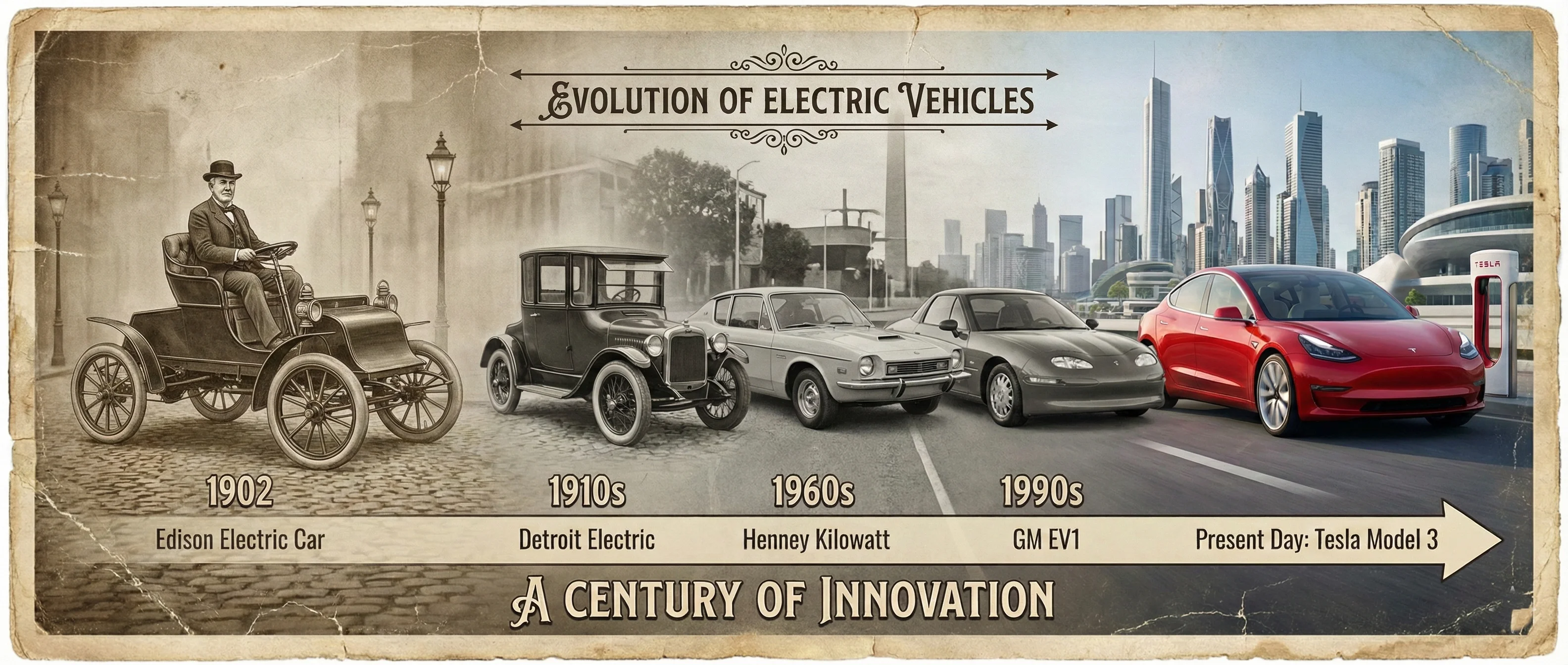
EV Ajajoon
Elektriajastu Algus
1830.-1840. aastatel eksperimenteerisid leiutajad Hollandis, Ungaris ja Ameerika Ühendriikides väikesemahuliste elektrisõidukitega.
1890. aastateks muutusid EV-d praktiliseks ja populaarseks. Need olid puhtad, vaiksed, lihtsad kasutada ja ei vajanud bensiiniautode käsivändaga käivitamist.
- 1890: William Morrison Des Moinesist, Iowast, loob esimese praktilise elektriauto Ameerika Ühendriikides
- 1897: New York Citys ilmuvad elektrilised taksod
- 1899: Elektrisõiduk ületab 100 km/h kiirusbarjääri
- 1900: EV-d moodustavad umbes kolmandiku kõigist teedel olevatest sõidukitest
EV-de Populaarsuse Tipp
1900. aastate algus oli tegelikult elektrisõidukite kuldajastu. Paljud juhid eelistasid neid nende kasutuslihtsuse ja töökindluse tõttu.
- Thomas Edison ja Henry Ford olid sõbrad; Edison töötas EV akude parandamise kallal, samal ajal kui Ford täiustas bensiiniautot
- EV-d olid eriti populaarsed naisjuhtide seas, kuna need ei vajanud ohtlikku käsivändaga käivitamist
- Suured tootjad nagu Baker Electric ja Detroit Electric tootsid tuhandeid EV-sid
- 1912. aastaks oli Ameerika Ühendriikides registreeritud umbes 34 000 elektriautot
EV-de Pimeaeg
Mitu tegurit viis elektrisõidukite languseni ja bensiiniautode domineerimiseni:
- Elektriline starter: Charles Kettering leiutas 1912. aastal bensiiniautodele elektrilise starteri, kaotades ühe peamise EV eelise
- Odav nafta: Rikkaliku nafta avastamine Texases ja Oklahomas tegi bensiini väga odavaks
- Paremad teed: Paranenud teedetaristu eelistas bensiiniautode pikemat sõiduulatust
- Masstootmine: Henry Fordi konveierliin muutis bensiiniautod massidele taskukohaseks
- 1935. aastaks: Elektriautod olid teedelt praktiliselt kadunud
Esimesed Taaselustamissekatsed
1970. aastate naftakriis tekitas taas huvi bensiini alternatiivide vastu.
- Mitu tootjat tootsid piiratud koguses elektrisõidukeid
- Enamikul oli väga piiratud sõiduulatus (65-100 km) ja nad kasutasid pliiakusid
- Kõrged kulud ja halb jõudlus takistasid nende massilist kasutuselevõttu
- CitiCar sai ajastu enimtoodetud EV-ks (umbes 4400 ühikut)
Modernsed EV-d Tekivad
California heitmevabade sõidukite (ZEV) mandaat sundis autotootjaid arendama praktilisi EV-sid.
GM andis 1996. aastal välja EV1 - modernse ajastu esimese masstoodangu EV. See oli revolutsiooniline, kuid lõpetati vastuoluliselt 2003. aastal.
- Toyota RAV4 EV (1997): Piiratud tootmisega elektriline linnamaastur
- Honda EV Plus (1997): Ainult liisinguga elektrisõiduk
- Need sõidukid tõestasid: et EV-d võivad olla praktilised, kuid akutehnoloogia polnud veel päris valmis
- Enamik varaseid EV-sid kutsuti tagasi ja hävitati, mis frustreeris varajasi kasutajad
Tesla Efekt
Kõik muutus, kui Silicon Valley idufirma otsustas ehitada elektrilise sportauto.
- 2008: Tesla laseb välja Roadsteri, tõestades, et EV-d võivad olla kiired, seksikad ja omada 320+ km sõiduulatust
- 2010: Nissan Leaf tuleb turule kui esimene massituru modernne EV (taskukohane, kuid praktiline)
- 2010: Chevrolet Volt tutvustatakse kui pistikühendusega hübriid
- Liitiumioonakude tehnoloogia muudab lõpuks pika sõiduulatusega EV-d praktiliseks
- Tarbijate taju hakkab muutuma
Massituru Läbimurre
2010. aastad nägid EV-de kasutuselevõtu eksponentsiaalset kasvu ja tehnoloogia paranemist.
- 2012: Tesla Model S tuleb turule, seades EV-dele uued standardid
- 2014: BMW i3 ja VW e-Golf toovad EV-d tuntud brändidelt
- 2017: Tesla Model 3 toob Tesla tehnoloogia massituru hindadeni
- 2018: Audi e-tron, Jaguar I-PACE näitavad, et luksusbrändid võtavad EV-sid tõsiselt
- Hiina muutub maailma liidriks EV tootmises ja kasutuselevõtus
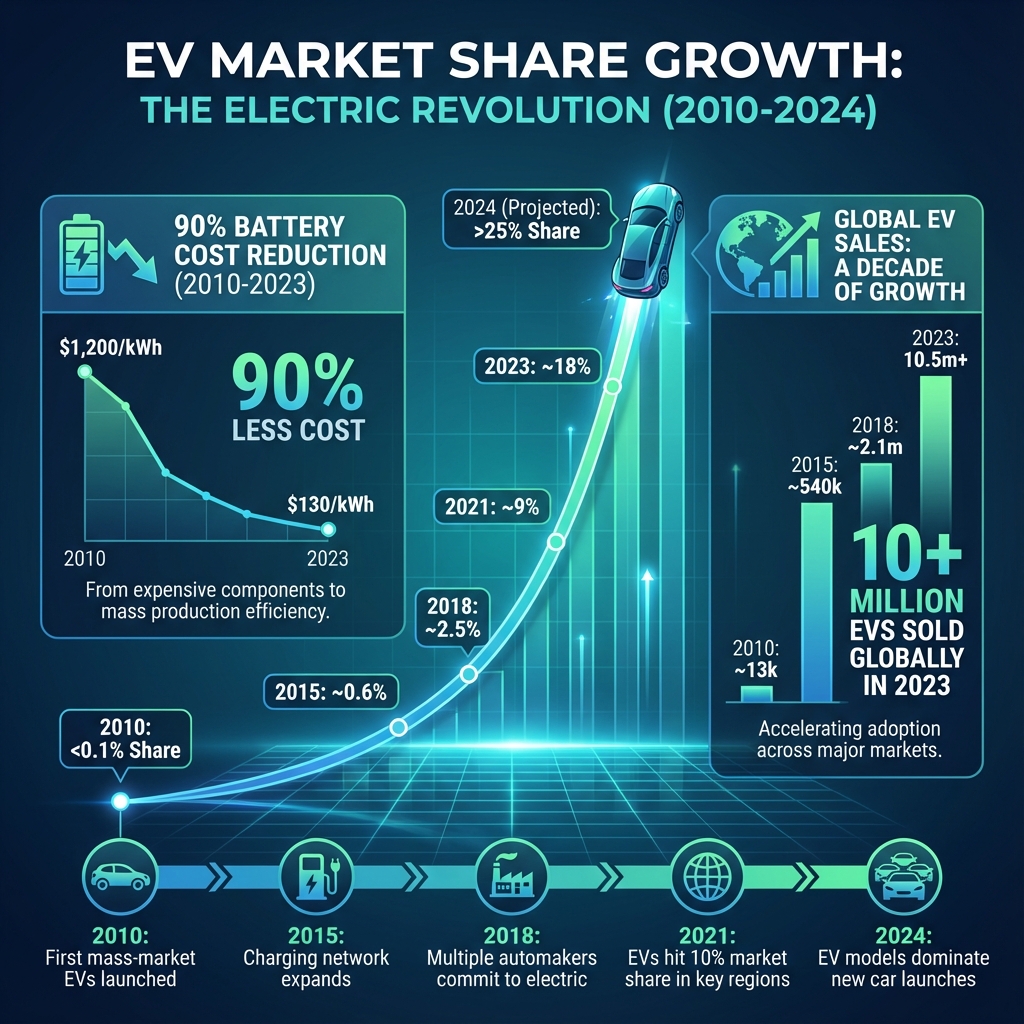
- Aku kulud langevad 87% aastatel 2010–2019
Elektriline Revolutsioon
EV-d liiguvad alternatiivist peavoolu rekordajaga.
- 2020-2021: Suured autotootjad pühenduvad täielikult elektrilisele tulevikule
- 2022: Ford F-150 Lightning tõestab, et EV-d saavad hakkama veoauto ülesannetega
- 2023: Globaalne EV müük ületab 10 miljonit ühikut aastas
- Suured tootjad teatavad plaanidest loobuda bensiiniautodest aastateks 2030-2035
- EV turuosa ületab Norras 80%, näidates, mis on võimalik
- Laadimistaristu laieneb kiiresti kogu maailmas
EV-d Jõuavad Ringiga Tagasi
Rohkem kui 120 aastat pärast nende esimest tippu realiseerivad elektrisõidukid lõpuks oma potentsiaali. Arenenud akutehnoloogia, keskkonnamured ja paranenud jõudlus on joondunud, et muuta EV-d enamiku kasutuste jaoks mitte ainult elujõuliseks, vaid paremaks kui bensiiniautod.
Õppetunnid Ajaloost
Tehnoloogia Võtab Aega
EV-d vajasid üle sajandi akuarendust, et saada tõeliselt praktiliseks. Liitiumioonakud olid läbimurre, mis tegi modernsed EV-d võimalikuks.
Taristu On Oluline
Elektritaristu puudumine maapiirkondades aitas bensiiniautodel domineerida. Tänapäeval on elekter igal pool, andes EV-dele fundamentaalse eelise.
Majandus Suunab Kasutuselevõttu
Odav nafta tappis varased EV-d. Tänapäeval muudavad kallis nafta ja langevad akuhinnad EV-d majanduslikult paremaks.
Mõnikord On Tulevik Ringikujuline
See, mis oli kunagi domineeriv, seejärel iganenud, võib saada uuesti domineerivaks õige tehnoloogia ja asjaoludega. Elektriajam oli õige vastus 1900. aastal ja see on õige vastus ka tänapäeval.